
Protection Applied After Surface Preparation
Concrete Sealing in Wentzville for driveways, patios, and walkways exposed to moisture, salt, and temperature extremes
Missouri's freeze-thaw cycles force water into concrete pores, where it expands as ice and creates internal pressure that eventually shows as surface cracks or spalling. Concrete sealing in Wentzville, Warrenton, New Melle, or a surrounding area reduces how much moisture penetrates the slab, limiting damage from winter conditions, road salt, oil drips, and UV exposure that gradually breaks down unprotected material. Soft Wash Elite applies sealer only after concrete has been thoroughly cleaned and dried, since the protective layer bonds to the surface itself—not to dirt, algae, or previous coatings that might remain.
Sealing creates a barrier that slows moisture absorption and resists staining from vehicle fluids, deicing chemicals, and organic material, making routine maintenance simpler and extending the time between deep cleanings. The process involves surface inspection to confirm the concrete is ready, application of sealer suited to the specific exposure conditions, and adequate curing time before the surface returns to regular use.
Request an assessment to determine whether your concrete is ready for sealing or requires cleaning first.
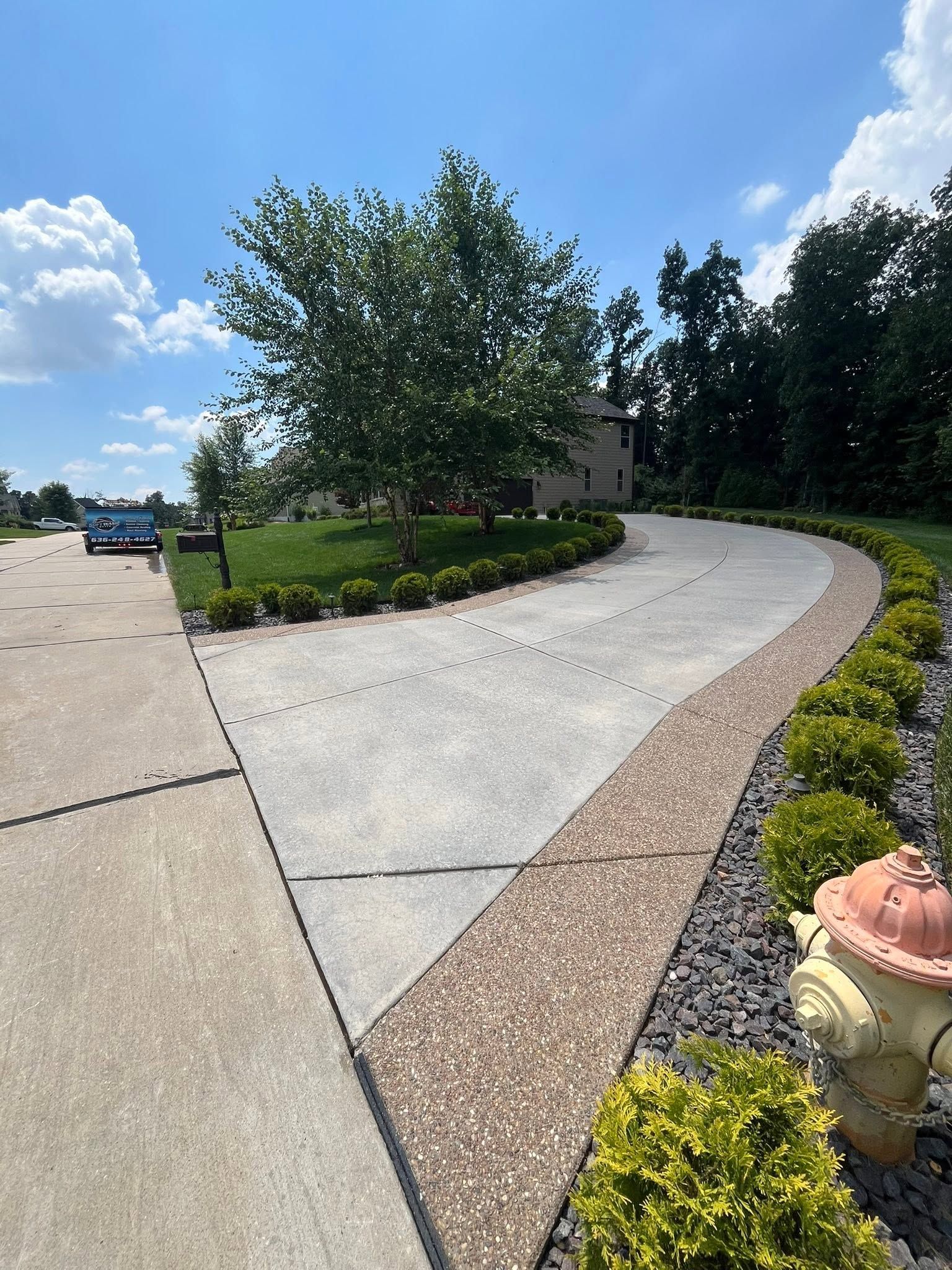
Concrete sealing doesn't repair existing damage, but it slows the progression of deterioration by limiting how much water, salt, and contaminants reach the interior structure. The sealer fills surface pores and forms a film that repels liquids rather than absorbing them, which matters most during winter when water intrusion leads to freeze-thaw damage and during summer when UV exposure degrades unprotected surfaces.
After sealing, water beads on the surface instead of soaking in, oil spills wipe away more easily, and the concrete maintains its color longer without the gray fading that comes from constant moisture cycling. You'll notice the surface has a slight sheen—more pronounced immediately after application, then settling to a low-gloss finish that indicates the sealer is still performing. Sealed concrete also stays cleaner between maintenance because contaminants sit on the barrier rather than embedding in the texture.
Sealer performance depends on surface preparation quality and environmental exposure—high-traffic areas wear through protection faster than decorative patios, and surfaces in full sun require UV-resistant formulations. Resealing typically becomes necessary every two to five years based on these factors, with visible wear patterns indicating when the barrier has thinned enough to allow moisture penetration again.
Common Questions About Sealing Concrete
Property owners in Wentzville and neighboring communities often ask about timing and expectations before committing to sealing, particularly when concrete already shows signs of weathering or previous coatings.
What needs to happen before sealer can be applied?
Concrete must be free of dirt, oil, algae, and previous sealers that might prevent bonding, and the surface must be completely dry—usually requiring 24 to 48 hours of dry weather after cleaning to ensure moisture won't be trapped beneath the new sealer.
How does sealing affect concrete that already has small cracks?
Sealer fills hairline surface cracks and prevents water from entering them, slowing further expansion, but it doesn't repair structural damage or stop cracks caused by settling or inadequate base preparation from widening over time.
When should resealing happen on previously treated concrete?
Visible wear patterns, water absorption instead of beading, and returning stain penetration indicate the sealer has degraded, typically occurring within two to five years depending on traffic, sun exposure, and winter salt use.
What's the difference between film-forming and penetrating sealers?
Film-forming sealers create a visible protective layer on the surface that resists stains and moisture but can wear away in high-traffic areas, while penetrating sealers soak into the concrete for internal protection without changing surface appearance but offer less stain resistance.
How long before sealed concrete can handle vehicle traffic or furniture placement?
Most sealers require 24 to 72 hours of curing time before the surface can support weight without marking, with full hardness developing over several days depending on temperature and humidity during application.
Soft Wash Elite evaluates your concrete's current condition and exposure factors to recommend appropriate sealing products and maintenance intervals. Schedule a sealing consultation to review your driveway, patio, or walkway and discuss cleaning requirements.